
Many homeowners spend years perfecting the look and feel of their interiors, only to treat the backyard as an afterthought. But the most livable homes today erase the line between inside and outside, using consistent materials, finishes, and design choices that carry the eye from living room to patio without a jarring break. Creating that seamless flow takes planning across several systems at once, from flooring to lighting to structural upgrades. This guide walks through the practical steps and professional considerations that turn a disconnected yard into a true extension of your home.
Choosing Flooring That Connects Interior and Exterior Spaces
 The floor is one of the first things people notice when they walk from an indoor room toward a patio door, and mismatched materials can make the transition feel abrupt. Many homeowners now choose wide-plank wood-look tile or engineered wood near sliding doors specifically because it echoes the flooring just a few feet away inside. When the interior features rich, warm tones, hardwood floor installation done well in adjoining rooms can be matched or complemented with weather-resistant composite decking outside to keep the visual thread unbroken.
Getting this transition right often means working with a flooring contractor who understands both indoor material limitations and outdoor durability requirements. It is worth asking questions before committing to a plan.
- Confirm whether the interior wood species has an outdoor-rated equivalent in color and grain
- Ask about moisture barriers where indoor flooring meets exterior thresholds
- Consider slip resistance ratings for any surface near pools or hose bibs
- Request samples viewed in actual daylight, not just showroom lighting
Planning Electrical Layouts for Patios and Outdoor Kitchens
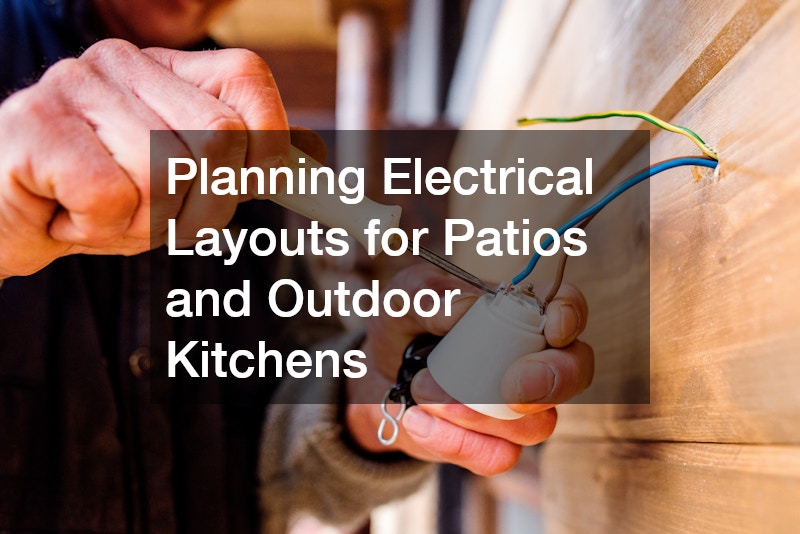
Outdoor living spaces increasingly function as second living rooms, complete with televisions, sound systems, string lighting, and small appliances, which means the wiring behind the scenes matters more than most people expect. A poorly planned setup leads to extension cords running across walkways or circuits that trip every time the blender and the space heater run together. Professional electrical installation ensures that outdoor-rated outlets, proper grounding, and weatherproof covers are placed exactly where they will be used, not just wherever was convenient during construction.
It also pays to think ahead about future additions, since retrofitting wiring into a finished patio is far more disruptive than planning capacity during the initial build. A licensed electrician can map out dedicated circuits for major appliances and separate lighting zones so you are not stuck with a single switch controlling everything.
- Ask for GFCI protection on every outdoor circuit near water sources
- Plan for low-voltage landscape lighting on its own transformer
- Discuss load capacity if you plan to add a hot tub or pizza oven later
- Route conduit underground before hardscaping is poured, not after
Powering Outdoor Living Upgrades With Electric Vehicle Charging
As more households add an electric vehicle to the driveway, the garage or carport becomes part of the broader outdoor living conversation rather than a separate project. Installing a home EV charger at the same time as other exterior electrical work can save money, since trenching and permitting are often shared across projects. It also means the charger location can be planned around how the family actually uses the driveway, patio, and walkways instead of being squeezed in as an afterthought.
Homeowners who bundle this work with other renovations typically find the process smoother, since one contractor can coordinate timing and inspections rather than juggling separate crews. Thinking about charger placement early also keeps cables away from walking paths and outdoor seating areas, which matters for both safety and aesthetics.
Coordinating Plumbing for Outdoor Kitchens and Water Features

A functional outdoor kitchen or a small fountain tucked into a garden bed both depend on plumbing lines that are sized and routed correctly from the start. Running a water line to an outdoor sink, ice maker, or grill station is not simply an extension of an indoor pipe; it requires attention to freeze protection, backflow prevention, and drainage that keeps water away from foundations. Experienced plumbers can evaluate your home’s existing water pressure and determine whether the main line can support additional outdoor fixtures without affecting service indoors.
Drainage is just as important as supply when it comes to keeping an outdoor space looking good year after year. Standing water near a patio or outdoor sink invites mosquitoes, staining, and eventual structural damage to nearby hardscaping.
- Ask about frost-proof hose bibs and shutoff valves in colder climates
- Request a dedicated cleanout for outdoor kitchen sinks
- Confirm that greywater from outdoor sinks is routed to proper drainage, not just the yard
- Discuss water softener needs if you plan an outdoor shower or pool fill line
Protecting the Yard With a Well Maintained Roof and Gutter System
It is easy to focus on furniture and landscaping while forgetting that the roof overhead directly shapes how well an outdoor space performs during storms. A single heavy downpour can send hundreds of gallons off a poorly managed roofline, and when gutters are clogged or undersized, that water finds the path of least resistance—usually straight onto a new patio or planting bed. Over time, this erodes soil, stains pavers, and undermines structures like pergolas or outdoor kitchen counters that were never designed to sit in standing water. Regular gutter cleaning, ideally twice a year in spring and fall, prevents the kind of overflow that turns a finished outdoor living area into a drainage problem. Homeowners should also check that downspouts extend at least four to six feet away from the foundation and patio edges, redirecting runoff into gravel beds, dry wells, or rain gardens rather than letting it pool near hardscaping. Gutter guards can further reduce debris buildup for properties surrounded by trees, cutting down on maintenance frequency. Reputable roofing companies can also advise on extending roof overhangs, installing larger-capacity gutters, or adding covered walkways that make a patio usable even during light rain. These upgrades not only protect the materials below but effectively expand the number of days the space gets used each year, turning a fair-weather feature into a true year-round extension of the home.
Gutters deserve specific attention because they are often the difference between a dry, protected outdoor living area and one that floods every time it storms. A roof shedding water without a functioning collection system can dump hundreds of gallons onto a patio during a single downpour, undermining pavers, eroding mulch beds, and staining siding along the way. Properly sized and sloped gutters are the foundation of that protection. As a general rule, gutters should slope about a quarter-inch for every ten feet of run, and 5-inch K-style gutters are usually sufficient for average roof pitches, while larger roofs or heavy-rainfall regions may call for 6-inch gutters to handle greater volume. Downspouts matter just as much as the gutters themselves. They should be placed to direct water well away from seating areas, fire pits, and outdoor kitchens, ideally discharging at least four to six feet from the foundation or routed through underground extensions to a dry well or drainage swale. Regular maintenance rounds out the system’s effectiveness. Clearing leaves and debris twice a year, checking for sagging hangers, and confirming that splash blocks or extensions are still positioned correctly all help protect both the hardscape and the home’s foundation from slow, cumulative water damage.
- Have gutters cleaned at least twice a year, ideally in spring and fall, and more often if mature trees hang overhead
- Consider gutter guards if leaf debris is a recurring problem, since they cut down on cleanings but still need an annual check
- Extend downspouts at least four to six feet away from patio edges to prevent erosion and staining on pavers or stone
- Check for proper slope so water does not pool near outdoor living surfaces, using a level to confirm at least a quarter-inch drop per ten feet
- Add splash blocks or underground drain extensions where downspouts empty near seating areas or garden beds
- Inspect gutters after major storms for sagging sections, loose brackets, or standing water that signal poor drainage
Defining Boundaries With Fencing That Matches Your Home’s Style
A cohesive outdoor living space needs clear boundaries, both for privacy and for visually framing the area the way a wall frames a room indoors. Fencing materials should complement the home’s exterior palette rather than clashing with it, which is why many homeowners now consult vinyl fence companies that offer a wide range of colors and styles designed to mimic painted wood without the ongoing upkeep. A well-chosen fence can also block wind, filter noise from neighboring properties, and create a more intimate, room-like feel around a patio or pool area.
Beyond aesthetics, fencing choice affects long-term maintenance costs and how much time you will spend on upkeep instead of enjoying the space. Vinyl options in particular resist warping, fading, and insect damage far better than traditional wood, which matters in climates with heavy sun or humidity.
- Match fence color to trim or shutters for a unified exterior look
- Choose privacy-style panels near patios and semi-open styles near gardens
- Ask about wind load ratings in storm-prone regions
- Confirm local height restrictions before finalizing a design
Refreshing Hardscaping and Siding With Routine Cleaning
Even the best-designed outdoor living space loses its appeal quickly if patios, siding, and walkways are covered in algae, mildew, or years of accumulated grime. Regular power washing restores the original color of pavers, brick, and vinyl siding, making the whole exterior feel as intentional and cared for as the interior of the home. This kind of maintenance is inexpensive compared to replacement and should be scheduled seasonally, especially before hosting gatherings or listing a home for sale.
Cleaning also has a practical safety benefit, since algae and moss buildup on stone or concrete surfaces can become dangerously slick when wet. A thorough cleaning before sealing a paver patio or resealing a deck ensures that protective coatings actually bond to the surface instead of trapping dirt underneath.
- Schedule cleaning before applying any sealant to hardscaping
- Use lower pressure settings on softer materials like wood decking
- Inspect grout lines and mortar joints while cleaning to catch cracks before they widen
- Address mildew on siding promptly to prevent it from spreading to outdoor furniture
Extending Kitchen Design Principles Into Outdoor Cooking Areas
Kitchens tend to be the most carefully designed room in a home, and that same attention to storage, workflow, and finish quality can and should extend outdoors. Custom kitchen cabinet companies increasingly offer weather-resistant materials such as marine-grade polymer or powder-coated aluminum, allowing homeowners to replicate the look of their indoor cabinetry in an outdoor kitchen without worrying about rot or rust. Matching cabinet hardware, countertop material, and color scheme between the two spaces reinforces the sense that the outdoor kitchen is a genuine extension of the home rather than a separate, bolted-on structure.
Storage planning matters just as much outside as it does inside, since outdoor kitchens need dedicated space for grilling tools, cushions, and dinnerware that should not be left exposed to the elements. Thinking through workflow, such as placing the grill near prep counters and keeping a clear path to seating, makes the space genuinely functional rather than just decorative.
- Choose countertop materials rated for UV and moisture exposure
- Include lockable storage for tools and cushions
- Match cabinet finishes to indoor kitchen hardware for visual continuity
- Plan adequate counter space on both sides of the grill for prep and plating
Planning Whole Property Flow With Professional Design Guidance
Homeowners planning a larger renovation or a new build altogether have a unique opportunity to design indoor and outdoor spaces together from day one, rather than retrofitting a disconnected yard later. Custom home builders can position windows, doors, and sightlines specifically to frame outdoor living areas, making the transition between spaces feel deliberate rather than incidental. This kind of coordinated planning also allows structural elements like load-bearing walls and roof lines to accommodate future additions, such as a covered outdoor room or a second-story deck.
Working with a builder who understands whole-property design also helps avoid costly mistakes, such as placing a patio door where it conflicts with drainage patterns or blocks the ideal spot for a fence line. Early coordination between builder, landscaper, and other trades keeps the entire project aligned around one cohesive vision.
- Discuss indoor-outdoor sightlines during the earliest design phase
- Ask how roof lines and overhangs will affect future patio covers
- Confirm that structural plans accommodate potential future additions
- Request a site plan that considers drainage before hardscaping begins
Blending indoor comfort with outdoor functionality is less about a single big purchase and more about a series of coordinated decisions across flooring, electrical, plumbing, roofing, fencing, and design. Tackling these elements with intention, and with the right professionals for each piece, prevents costly rework and creates a yard that genuinely feels like part of the home. Start by identifying which system in your own outdoor space feels the most disconnected, then build a plan outward from there.
