
You have painted the walls, sealed the contract with your contractor, and circled a move-in date on the calendar. Then a sofa gets backordered, a dining set ships late, or a custom cabinet piece stalls in production, and suddenly your finished home sits empty while you wait. Furnishing delays are one of the most overlooked reasons renovation timelines slip past their target date. Understanding where these delays come from, and how they intersect with the rest of your renovation schedule, can help you plan realistically and avoid unnecessary frustration.
Coordinating Exterior Work With Interior Furnishing Timelines

Many homeowners assume furnishing is the last step of a renovation, completely separate from the structural and exterior work happening earlier. In reality, exterior projects and furniture delivery windows often need to be planned together, because both compete for the same move-in date. If your roofing companies are still finishing shingle work or your fencing installation is behind schedule, delivery trucks carrying new furniture may not even be able to access the property safely. Scheduling conflicts between outdoor contractors and furniture delivery teams are more common than people expect.
A smart approach is to build a master calendar that includes every vendor, not just the ones working inside the house. This way you can see overlapping deadlines before they become a problem and adjust furniture delivery dates accordingly.
- Confirm exterior work completion dates before scheduling furniture drop-off
- Ask delivery companies about their access requirements for trucks and crews
- Build in a buffer week between exterior project completion and furniture arrival
- Communicate schedule changes to every vendor involved, not just one
Why Custom Furniture Orders Take Longer Than Expected
Custom and made-to-order furniture pieces are a leading cause of move-in delays because production timelines are often underestimated during the planning phase. A sofa in a specific fabric, a dining table in a particular wood stain, or a sectional built to fit an unusual room shape can take eight to sixteen weeks to manufacture and ship. That window often doesn’t include the additional one to three weeks needed for final delivery scheduling, white-glove service coordination, or last-mile freight once the piece leaves the factory. Several factors can push these timelines even further. Fabric or leather shortages, holiday season order surges, and multi-step upholstery processes all add unpredictable delays, and some manufacturers pause production entirely during peak demand periods like late summer and early fall when many households are furnishing at once. Pieces requiring overseas manufacturing face the added risk of customs delays or shipping container shortages, which can tack on several more weeks with little warning. Homeowners frequently order these pieces too late, assuming they will arrive at the same pace as in-stock furniture from a local showroom. In reality, in-stock items typically ship within one to two weeks, while anything labeled “special order,” “made to order,” or “custom” should be treated as a three-to-four-month commitment from the moment the order is placed. Ordering key pieces before construction even wraps up — rather than waiting until the space is move-in ready — is often the only way to keep both timelines aligned.
Custom furniture pieces typically require 8 to 16 weeks under normal conditions, and that clock only starts once your order is confirmed and the deposit clears — not when you first browse the showroom. Supply chain disruptions, factory backlogs, and shipping delays can add extra weeks or even months on top of the original estimate, especially for upholstered items that depend on imported fabrics or specialty foams. Custom cabinetry, sofas with specific fabric orders, and made-to-measure dining tables are among the worst offenders, since each involves multiple production stages that can stall independently. A single delayed component, like a fabric roll stuck at customs or a hardware shipment from overseas, can hold up an entire piece even if everything else is finished. If your renovation timeline is tight, it is worth asking every retailer for a realistic worst-case delivery window rather than the best-case scenario they advertise. Get this in writing, and ask specifically about their track record over the past six months rather than their standard quoted lead time. It also helps to ask pointed questions before signing: Is the fabric or material already in stock? Has production started, or are you in a queue behind other orders? What happens to your position in that queue if a supplier delay occurs? These answers often reveal a much more honest picture than the delivery date printed on your invoice.
- Order custom pieces the same week you finalize your renovation contract, since many upholstery and casegoods makers quote 10-16 weeks before fabric and finish delays are even factored in
- Ask for written delivery estimates, not verbal promises, and get the estimate tied to a specific calendar date rather than a vague “6-8 weeks” range
- Request tracking updates at the halfway point of production to catch fabric backorders or finish issues while there’s still time to adjust
- Build in a buffer week between the promised delivery date and your move-in date, since “on schedule” for a manufacturer often means shipped, not delivered
- Have a backup furniture plan in case the custom piece arrives late, such as a rental package or a floor-model substitute you can return once the real order arrives
- Confirm who handles delivery logistics (white-glove service vs. freight drop-off), since a missed appointment for a freight delivery can add another 1-2 weeks to your timeline
How Rental Furniture Can Bridge the Gap

When custom orders or backordered pieces threaten to delay your move-in date, temporary furniture solutions can keep your household functioning without forcing you to wait in a half-empty home. Many companies now offer rent to own furniture programs that let you use fully furnished rooms immediately while your permanent pieces are still in production. This option is particularly useful for families who have already sold or moved out of a previous residence and have nowhere else to stay.
Rent to own furniture arrangements also give you flexibility if your taste changes once you see the finished space in person. Instead of committing to an expensive custom order sight unseen, you can live with rental pieces for a few months and make a more confident final decision.
- Ask rental companies about swap options if your permanent furniture changes
- Compare rental costs against the cost of delaying your move-in date
- Check delivery lead times for rental furniture, which are usually much shorter
- Confirm the rental company can pick up items once your permanent furniture arrives
Structural Trades That Must Finish Before Furniture Arrives
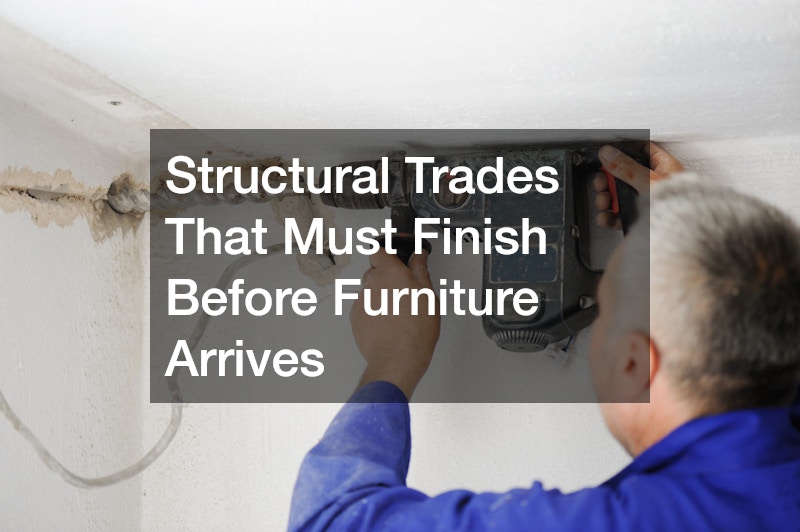
Before any moving truck or furniture delivery team steps inside your home, certain structural and mechanical work needs to be fully signed off. An electrical contractor typically needs to complete final inspections on outlets, lighting fixtures, and panel work before furniture is placed against walls or near outlets. Similarly, a plumber must finish testing water lines and fixtures, since furniture placed too early can block access to pipes that still need adjustment.
Delaying these trades even by a few days can push your entire furnishing schedule back further than homeowners anticipate. It is worth confirming final inspection dates with both the electrical contractor and plumber well before you schedule furniture delivery, so you are not caught moving pieces around mid-installation.
- Request final inspection paperwork before booking furniture delivery
- Keep hallways and rooms clear until wiring and plumbing work is signed off
- Ask your contractor for a written completion date for each trade
- Build a few days of cushion between trade completion and furniture arrival
Outdoor Living Spaces and Their Own Furnishing Schedules
 Interior furniture is not the only piece of the puzzle. Outdoor living spaces have their own furnishing timelines that can be just as vulnerable to delay. If you are working with a deck contractor to build a new outdoor entertaining area, patio furniture cannot be placed until the decking material has cured and railings are fully secured. Ordering outdoor furniture too early, before the deck is structurally complete, often means storing bulky pieces in a garage or shed for weeks.
Weather also plays a bigger role in outdoor furnishing timelines than most people expect. Rain delays construction, and once a deck contractor finishes the structure, humidity or temperature swings can affect when cushions, cabinetry, and other weather sensitive furniture pieces should be delivered.
- Confirm the deck curing timeline before ordering outdoor furniture
- Choose weather resistant materials if your schedule is tight
- Store outdoor furniture indoors until the space is fully move-in ready
- Coordinate delivery with a dry weather window when possible
Garage and Storage Access During the Furnishing Phase
Garages often become a temporary storage zone for furniture waiting to be placed inside a finished home, which means garage functionality matters more during a renovation than people realize. If you still need to install garage door hardware or complete an opener installation, that work should be finished before boxes and furniture start piling up inside. A garage that cannot open and close properly is a security risk and an inconvenience when movers are trying to bring items in and out.
Planning garage completion around your furniture delivery schedule prevents a bottleneck at the one entry point many deliveries rely on. Confirm with your installer that the garage door will be fully operational, including remote access and safety sensors, before any large furniture shipment is scheduled to arrive.
- Schedule garage door completion before furniture deliveries begin
- Test remote openers and safety sensors ahead of move-in day
- Use the garage as temporary furniture storage only once it is secure
- Keep a clear path from the garage to the home’s interior for movers
Additional Storage Solutions for Overflow Furniture
Even with careful planning, renovations often produce a window where you have more furniture than finished rooms to put it in. This is especially true if some rooms are still being painted or flooring is not fully cured. Many homeowners turn to shed builders to create additional on-property storage that keeps furniture protected from weather while renovation work wraps up inside the house.
A newly built shed can also serve a longer-term purpose once the renovation is complete, making it a practical investment rather than a temporary fix. Discuss timelines closely with shed builders if you need the structure ready before your furniture delivery date, since permitting and site preparation can add several weeks to the process.
- Ask shed builders about expedited build options if your timeline is tight
- Choose a shed size based on how much overflow furniture you expect
- Confirm the shed will be weatherproof before storing upholstered items
- Plan shed placement early so it does not interfere with other contractor access
Protecting Roof and Drainage Systems Before Furniture Moves In
A finished roof does more than complete the look of your renovation, it protects everything you are about to move inside. Before scheduling furniture delivery, confirm that gutters have been properly installed and are directing water away from entry points, since flooding near a doorway can damage furniture within minutes of arrival. This is a small detail that gets overlooked when homeowners are focused on interior finishes.
It is also worth checking that any roofing companies you worked with have signed off on the job and addressed any remaining punch list items. Residential roofing companies typically offer a walkthrough before closing out a project, and this is the right time to flag anything that could put your new furniture at risk once it is inside the home.
- Confirm gutter installation is complete before scheduling furniture delivery
- Ask for a final walkthrough with your roofing contractor
- Check for any active leaks during a test with a hose before move-in
- Address drainage issues near entry doors before furniture arrives
Furnishing delays rarely happen in isolation, they are usually tied to the same scheduling ripple effects that come with any renovation involving multiple trades and vendors. By mapping out exterior work, structural trades, storage needs, and furniture delivery windows together, you give yourself a realistic move-in date instead of a hopeful guess. Start by contacting your furniture suppliers now to confirm honest delivery timelines, and use temporary solutions where needed to avoid living out of boxes longer than necessary. A little extra planning today can mean walking into a fully finished, fully furnished home right on schedule.
