
Water damage rarely announces itself with a dramatic flood. More often it starts as a faint stain, a musty smell, or a slightly soft spot underfoot, quietly spreading while homeowners assume everything is fine. By the time the damage becomes obvious, repair costs have often multiplied and structural or health risks have set in. Knowing where to look and what warning signs matter can save you thousands of dollars and a lot of stress.
Aging Roof Shingles and Hidden Leaks
Roofs take the brunt of weather damage, yet most homeowners never inspect them until a ceiling stain forces the issue. Asphalt shingles are built to last roughly 20 to 25 years, but harsh sun, heavy rain, and freeze-thaw cycles can shorten that lifespan considerably, especially on the side of the roof that gets the most direct sunlight. Small cracks, curling shingles, or missing granules can let moisture seep into the decking for months without any visible sign indoors. By the time a brown ring appears on the ceiling, water has often been tracking along rafters and insulation for weeks, quietly encouraging mold growth and rotting wood in places you can’t see. Flashing around chimneys, vents, and skylights is another common weak point, since the sealant around these fixtures tends to dry out and crack years before the shingles themselves show obvious wear. A professional roofer can spot early wear during a routine inspection that most people would completely overlook from the ground, using tools like moisture meters and a closer look at the attic decking to catch problems before they spread. Scheduling this kind of checkup once a year, or right after a major storm, is far cheaper than replacing sagging plywood or repairing water-stained drywall down the line.
- Curling or cracked shingles after severe weather, especially following hailstorms or winds over 50 mph
- Granules collecting in gutters or downspouts, a sign shingles are wearing thin and losing their protective coating
- Bald or shiny patches where granules have worn away completely, leaving shingles exposed to UV damage
- Dark streaks or moss patches on the roof surface, often signaling trapped moisture and algae growth
- Daylight visible through the attic boards, which usually means gaps large enough for water to follow
- Soft or sagging spots near roof valleys, where water naturally pools and rotting decking is most likely
- Rusty or loose flashing around chimneys and vents, common entry points for slow, hidden leaks
Overflowing Roof Runoff and Poor Drainage
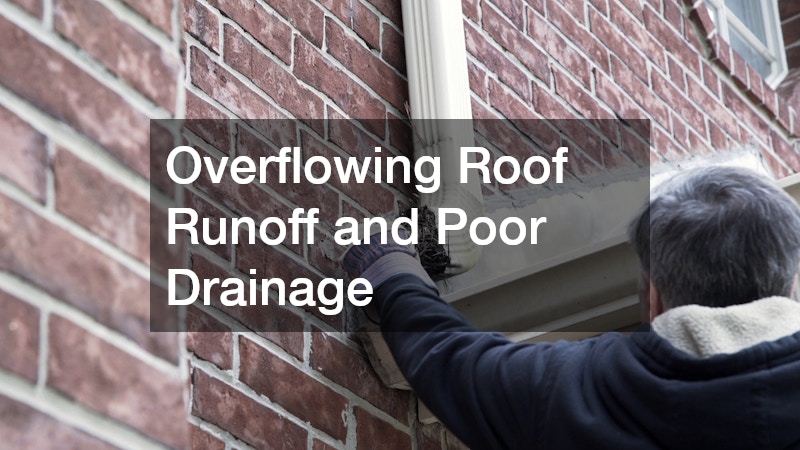
Roof runoff is designed to move water away from your home, but when the roofline channels water improperly or the ground below can’t absorb it fast enough, that water has nowhere to go except back toward the walls and foundation. Poor drainage can cause water to seep behind exterior trim, rot wood siding, and pool near the base of the house. Regrading low spots and directing downspout runoff away from the foundation, especially before heavy rain seasons, prevents this slow but steady source of damage.
- Water pooling near the foundation during rainfall
- Soil that stays soggy for days after a storm
- Visible erosion channels cut into the yard near the house
- Peeling paint or rot on nearby siding
Basement Foundation Cracks and Slow Seepage
Foundation cracks often start as hairline fissures that homeowners dismiss as cosmetic. Over time, though, these cracks widen and allow groundwater to seep in, especially after heavy rain or snowmelt. Left unaddressed, this slow seepage can weaken the foundation and create the perfect environment for mold growth in unfinished basement spaces.
The tricky part is that seepage doesn’t always look dramatic. Sometimes it’s just a faint white mineral residue on the concrete or a persistent damp smell that never fully goes away. Catching these clues early, rather than waiting for standing water, is what separates a simple sealant fix from a major structural repair.
Plumbing Pipe Leaks Behind Walls
Pipes hidden inside walls can leak for weeks or even months before anyone notices anything wrong. Because the damage stays out of sight, homeowners often miss the early warning signs entirely, and by the time water finds its way to a visible surface, it’s usually already saturated the insulation, framing, or subfloor behind it. A slow drip behind drywall often shows up first as a faint discoloration, a warped baseboard, or an unexplained increase in the water bill. Other clues include a musty smell in one room that never quite goes away, peeling paint or bubbling wallpaper, and floor tiles that feel slightly soft or spongy underfoot. Even a small, steady leak of just a few drips per minute can waste over 100 gallons of water a month, which explains why bills climb before any visible damage appears. These leaks are especially common at pipe joints, behind washing machine connections, and around older galvanized or polybutylene piping that has started to corrode or degrade with age. Homes built before the 1990s are particularly worth watching, since much of that plumbing is now well past its expected lifespan. Calling local plumbers at the first sign of these symptoms is far cheaper than waiting until the wall needs to be torn open. A simple inspection with moisture meters or thermal imaging can pinpoint the leak’s exact location, often sparing homeowners the cost of cutting into multiple sections of wall just to find the source.
- Unexplained spike in monthly water usage — even a 10-15% jump with no change in habits can signal a hidden leak
- Warm spots on the floor, indicating a hot water line leak, especially in slab homes with radiant heating pipes
- Bubbling or peeling paint on interior walls, often paired with a musty smell as moisture seeps through drywall
- A faint dripping sound inside walls or ceilings, most noticeable at night when the house is quiet
- Discolored or yellowish stains forming in a ring pattern on walls or ceilings near plumbing lines
- Slightly warped or soft drywall that gives when pressed, signaling prolonged moisture saturation behind the surface
- A noticeable drop in water pressure at one or more fixtures, suggesting water is escaping before reaching the tap
Water Heater Corrosion and Tank Failure

Water heaters are one of the most overlooked appliances in a home, often tucked away in a closet or basement corner where nobody checks them regularly. As tanks age, internal corrosion can quietly weaken the metal until a sudden rupture floods the surrounding area. Most units last eight to twelve years, so if yours is approaching that age, it’s worth inspecting for rust-colored water or popping sounds during heating cycles.
When a tank does fail, the aftermath can be extensive if it goes unnoticed for even a day, particularly if the unit is installed on an upper floor. Professionals who specialize in water damage cleaning restoration often point to water heater failures as one of the most common causes of sudden, large-scale indoor flooding. Installing a drain pan and periodically testing the pressure relief valve are simple steps that reduce the risk significantly.
Window and Door Seal Deterioration

Seals around windows and doors break down over time due to sun exposure, temperature swings, and general age, allowing water to seep in during storms. Caulk typically lasts only 5 to 10 years before it starts to shrink, harden, or pull away from the frame, and cheaper builder-grade caulk can fail even sooner. Weatherstripping around doors wears out faster still, especially on entryways that get heavy foot traffic or direct sun exposure. This kind of intrusion is easy to miss because it often shows up as a small discoloration on the wall below a windowsill rather than an obvious puddle. Other subtle warning signs include a musty smell near a window frame, paint that’s bubbling or peeling on the interior trim, or a door that suddenly feels harder to latch because the frame has swollen with moisture. By the time any of these are noticeable, water may have already been tracking behind the wall for months. Homeowners should run a hand along seals every season to check for brittleness, gaps, or cracking caulk, paying particular attention to south- and west-facing windows that take the brunt of sun exposure. It’s also worth checking the corners of window frames first, since caulk tends to crack there before it fails along the straight edges. A simple test is to spray a hose lightly around a suspect window from the outside for a minute or two while someone watches from inside for any signs of seepage.
- Cracked, brittle, or missing caulk around window frames, especially on south- and west-facing windows exposed to more sun and temperature swings
- Drafts felt near closed windows or doors, often signaling gaps that also let in moisture during wind-driven rain
- Discoloration, staining, or soft spots on walls, ceilings, or floors below and around windows
- Fogging or trapped moisture between double-pane glass, indicating a broken seal and lost insulating gas
- Peeling or bubbling paint on window sills and door trim, a sign moisture is seeping into the wood beneath
- Soft or spongy wood when pressed near frames, which often means rot has already set in below the surface
- Musty odors near windows or doors, even without visible staining, pointing to hidden moisture buildup
- Rust or corrosion on window hardware, hinges, or door hinges, which accelerates when metal stays damp
Yard Grading and Landscape Drainage Issues
The slope of your yard plays a much bigger role in water damage than most homeowners realize. If the ground slopes toward the house instead of away from it, every heavy rain sends water straight toward the foundation. This is especially critical for waterfront properties, where an experienced lake home builder knows how to grade the land and position drainage features to keep runoff moving away from the structure. Choosing the right landscaping materials, such as gravel beds, French drains, or permeable pavers, can redirect water flow and protect the base of the home from constant moisture exposure.
Improperly installed garden beds or mulch piled too high against the siding can also trap moisture against exterior walls. This creates a slow, hidden path for water to work its way into the structure, especially around wood siding or lower-level entry points. A simple regrading project or updated drainage plan often solves a problem that has been quietly building for years.
Fence Post and Outdoor Structure Rot
Water damage isn’t limited to the interior of your home; it also affects outdoor structures that homeowners tend to check even less often. Wood fence posts set in soil that retains too much moisture can rot from the base up, weakening the entire structure long before it becomes visibly unstable. When it’s time for fence installation or replacement, choosing pressure-treated wood or setting posts in gravel-lined concrete footings helps prevent this same issue from recurring.
- Wobbly or leaning fence posts
- Soft, spongy wood near the ground line
- Visible splitting or discoloration at post bases
- Standing water pooling near fence lines after rain
Flooring and Countertop Moisture Damage

Water damage in kitchens and bathrooms often starts small, such as a slow leak under a sink or a poorly sealed edge near a countertop. Over time, moisture can seep into subflooring or cabinetry, causing warping, swelling, or mold growth that isn’t visible until the damage is extensive. Natural stone and laminate countertops are particularly vulnerable at the seams, where water can wick underneath if the sealant has worn away.
For homeowners renovating these spaces, choosing epoxy flooring in moisture-prone areas like basements, laundry rooms, or garages adds a durable, water-resistant barrier that traditional flooring can’t match. Resealing countertop seams every year or two, especially around sinks and cooktops, is another simple step that prevents small leaks from turning into costly subfloor and cabinet repairs down the road.
Electrical Systems Compromised by Moisture
Water and electricity are a dangerous combination, and moisture intrusion near outlets, panels, or wiring should never be ignored. Even a small amount of water reaching an electrical system can cause corrosion, shorts, or fire hazards that aren’t immediately obvious. If you notice flickering lights, discolored outlets, or a burning smell near a damp area, it’s time to call licensed electricians rather than attempting a fix yourself.
- Discolored or warm outlet covers
- Flickering lights after rain or plumbing leaks
- Tripped breakers with no clear cause
- Visible corrosion on wiring or panel components
Water damage tends to grow in the places homeowners check least often, which is exactly why routine inspections matter more than reactive fixes. Walking through your home a few times a year with this list in mind can help you catch small issues before they become expensive emergencies. When in doubt, bringing in a qualified professional for a second opinion is always cheaper than waiting for the damage to become impossible to ignore.
