
A patchy lawn, a crumbling slope, and a dark walkway can make even a spacious yard feel disconnected and uninviting. Turning that same space into a cohesive outdoor living environment takes more than a few new plants — it requires a plan that addresses soil health, grading, structure, and light all at once. The good news is that homeowners don’t need a landscaping degree to get this right, just a clear understanding of what each piece contributes. This guide walks through the key elements that turn a random collection of yard features into one unified, functional space.
Start With a Clear Vision for the Whole Property
 Before any digging or planting begins, it helps to walk your property and identify how each area currently gets used and how you want it to feel instead. Think about sightlines from your windows, the flow between your patio and lawn, and where your eye naturally lands when you step outside. A unified yard usually shares a consistent material palette, a repeated plant selection, and a logical path from one zone to another. Sketching a rough map, even a simple one on paper, gives every later decision — from lighting placement to bed shapes — a shared reference point.
Professional landscaping teams often start projects this same way, mapping zones for entertaining, gardening, and quiet relaxation before touching a shovel. Homeowners can borrow that same discipline by listing three or four priorities, such as more privacy, better drainage, or a play area for kids. Having that list keeps the project focused and prevents the yard from becoming a mismatched collection of trends.
Clear Overgrown Areas Before You Design Anything
Many yards have years of overgrowth, volunteer trees, or dense brush that hide the actual usable space underneath. Tackling this early gives you an accurate picture of your lot’s real shape, slope, and soil conditions before you commit to a design. Skipping this step often means designing around problems you can’t even see yet, like a low spot that floods or a root system that will eventually crack a patio slab.
For larger properties or wooded edges, land clearing is often the most efficient way to reclaim usable acreage without damaging the healthy trees you want to keep. A professional crew can selectively remove invasive species, dead trees, and tangled underbrush while leaving mature shade trees and healthy root systems intact. This matters more than most homeowners expect, since even an acre of moderately overgrown land can take a weekend crew days to clear safely by hand, while proper equipment and know-how cut that time dramatically and reduce the risk of soil compaction or accidental damage to what you want to save.
Before clearing begins, it’s worth flagging any trees, boulders, or natural features you want preserved so nothing gets removed by mistake. It’s also the right time to check for buried utility lines, septic fields, or drainage easements, since these often get discovered mid-project otherwise.
Once the ground is visible again, it becomes much easier to plan where a patio, garden bed, or fence line should actually go. You’ll also get a clearer read on drainage patterns, sun exposure, and soil quality across the property, all of which shape smarter, longer-lasting design decisions later on.
It is worth distinguishing between clearing a small brush pile yourself and tackling a heavily wooded or sloped section, which usually calls for equipment and experience most homeowners don’t have on hand. A few dead shrubs or a patch of overgrown weeds can be handled with basic tools over a weekend, but acreage covered in mature trees, thick vines, or invasive species like kudzu or bamboo often requires a brush hog, stump grinder, or even a small excavator to clear safely and completely.
Slopes add another layer of complexity, since removing vegetation can destabilize soil that was previously held in place by root systems. In these cases, a landscaping contractor can assess erosion risk and recommend whether retaining walls or terracing should happen before or after clearing begins.
Rushing this step often leads to costly redesigns later once hidden stumps, roots, or drainage issues surface. A stump left just below the surface can crack a mower blade or force you to reroute an entire patio layout, while unseen roots frequently interfere with irrigation lines or foundation work months down the road.
It also pays to check for buried utility lines and call for a utility locate before any heavy digging starts, since striking a gas or water line during clearing can turn a simple cleanup into an expensive emergency. Taking the time to fully assess and clear the site upfront, rather than working around obstacles as they appear, saves both money and frustration once the actual design phase begins.
Reclaim Wooded or Brushy Edges Without Bare Dirt
Traditional clearing methods often leave a yard looking scraped and barren, which can invite erosion and weeks of muddy conditions before anything grows back. Bulldozing or excavating overgrown edges strips away topsoil along with the brush, leaving compacted dirt that struggles to support new grass or landscaping for months.
Forestry mulching offers a gentler alternative, grinding brush, small trees, and debris into a protective mulch layer that stays right on the ground. A single machine can typically clear a quarter-acre of dense brush in a day, chewing through saplings and tangled undergrowth up to six or eight inches in diameter without ever digging into the soil beneath.
This method preserves topsoil structure, reduces erosion on slopes, and actually feeds nutrients back into the earth as the mulch breaks down over the following season. The resulting mulch layer also suppresses weed regrowth and helps retain soil moisture, which can cut down on watering needs while new plantings establish themselves.
It also tends to be faster than hauling away debris, since the material is processed on-site rather than trucked off the property. That eliminates the added cost and disruption of dump runs or rented containers, and it means fewer heavy trucks compacting the surrounding lawn during cleanup. For homeowners dealing with steep, rocky, or hard-to-access wooded edges, it’s often the most practical way to reclaim usable space without leaving scars on the landscape.
- Leaves a natural-looking, mulched surface instead of exposed dirt, since forestry mulching grinds brush and small trees into wood chips right where they fall
- Reduces erosion risk on sloped or wooded property edges by keeping root systems and topsoil intact rather than scraping the ground bare
- Minimizes disruption to surrounding healthy vegetation, protecting mature trees you want to keep while clearing invasive or overgrown growth around them
- Often completed faster than traditional clear-and-haul methods, since there’s no need to load, transport, or dump debris off-site
- Cuts down on equipment traffic across your property, since one mulching machine can replace a chainsaw crew, a chipper, and a hauling truck
- Suppresses weed growth naturally, as the resulting mulch layer blocks sunlight from reaching competing seedlings
- Adds organic matter back into the soil as the mulch breaks down over time, improving fertility along tree lines and edges
Build a Healthy Foundation With the Right Soil

No amount of design vision will overcome poor soil, since roots, grass, and flower beds all depend on what’s happening beneath the surface. Before planting anything new, it’s worth testing your existing dirt for drainage and nutrient content, since many yards suffer from compacted clay or depleted topsoil left over from construction. Amending problem areas with quality garden soil gives new plantings a much stronger start and reduces the amount of fertilizer and water they’ll need down the road. This is especially important in raised beds or newly graded areas where the original topsoil may have been stripped away entirely.
A simple squeeze test can tell you a lot: soil that clumps into a hard ball is likely heavy in clay, while soil that falls apart completely may be too sandy to hold nutrients. Either extreme benefits from organic matter mixed in before planting season begins.
Manage Slopes and Elevation Changes With Structure
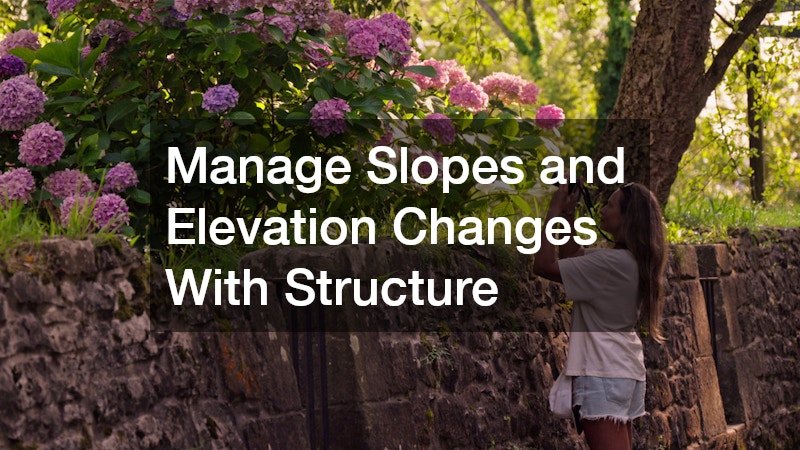
Sloped yards present both a design challenge and a practical one, since runoff, erosion, and unusable terrain can limit how much of the property actually gets enjoyed. Adding structure to a slope through terracing can turn a steep, awkward hillside into flat, usable zones for seating, gardens, or lawn space. Working with an experienced retaining wall contractor ensures the structure is engineered correctly, accounting for drainage, soil pressure, and frost conditions specific to your region. A poorly built wall can fail within a few seasons, so proper footing and backfill matter just as much as the finished appearance.
Beyond function, a well-placed wall also becomes a visual anchor that ties different yard levels together, giving the whole property a more intentional, finished look rather than a series of disconnected slopes.
Choose Materials That Tie the Landscape Together
The physical materials used throughout a yard play a huge role in whether it feels unified or scattered. Repeating a color, texture, or shape across multiple features helps different zones feel like part of the same design story. Many homeowners select retaining wall blocks that echo the tone of a nearby patio or walkway, creating a visual thread that carries the eye through the entire property. Matching hardscape materials also simplifies future additions, since new features can pull from the same established palette.
- Match wall or edging material tones to existing patios or walkways
- Repeat one or two accent colors across multiple hardscape features
- Choose textures that complement rather than compete with plantings
- Keep material choices consistent between front and back yard zones
Extend Enjoyment Into the Evening Hours
A yard that only looks good during daylight hours misses half its potential, especially for households that spend more time outside after work or on weekend evenings. Thoughtfully placed landscape lighting highlights architectural features, illuminates pathways, and adds a layer of safety around steps, walls, and pool edges. Low-voltage LED fixtures have made this upgrade far more affordable and energy-efficient than older lighting systems, with many options now easy to install without professional electrical work. Layering light sources, rather than relying on one bright fixture, creates a softer and more dimensional look after dark.
Consider how light interacts with your other hardscape choices, since a well-lit retaining wall or garden bed can become a nighttime focal point just as striking as it is during the day.
Keep the Lawn Consistently Healthy Year-Round
A unified yard needs a lawn that looks intentional rather than patchy or inconsistent, and that comes down to a steady maintenance routine rather than one-time fixes. Regular mowing, aeration, and seasonal overseeding all contribute to thicker, more even turf that ties the whole landscape together visually. Many homeowners find that working with commercial lawn care services simplifies scheduling for larger properties, since professional crews can coordinate mowing, edging, and seasonal treatments on a consistent timeline. This kind of routine care prevents the bare patches and uneven growth that make a yard look neglected even when other features are well designed.
Consistency matters more than intensity here — a lawn mowed at the correct height weekly will usually outperform one that’s ignored for a month and then cut too short all at once.
Protect Turf and Beds From Weeds and Nutrient Loss

Even a well-designed yard can quickly look messy if weeds take over garden beds or invade the lawn’s edges. Staying ahead of the problem with proactive weed control protects the investment you’ve already made in soil amendments and new plantings, since weeds compete directly for water, sunlight, and nutrients. A pre-emergent application in early spring, before soil temperatures hit 55 degrees, stops crabgrass and other invasive species before they germinate, while spot-treating with post-emergent products handles anything that slips through later in the season.
Mulching garden beds with two to three inches of organic material does double duty, suppressing weed growth while slowly breaking down to enrich the soil. Along lawn edges, a clean physical border between turf and beds makes it far easier to spot creeping weeds before they establish a foothold.
Combining this with a regular feeding schedule keeps grass green and resilient against foot traffic, drought stress, and disease. Lawns generally need between two and four pounds of nitrogen per thousand square feet each year, split across multiple applications rather than one heavy dose that can burn the grass or wash away in runoff.
Many grass fertilizing companies offer seasonal programs timed to your specific climate, applying the right nutrient balance in spring, summer, and fall rather than a single generic treatment. These programs often bundle soil testing into the first visit, which reveals pH imbalances or nutrient deficiencies that generic store-bought fertilizers can’t address, giving you a more targeted and cost-effective long-term result.
Skipping either of these steps tends to show up fast — thin, yellowing turf or weed-choked beds can undo months of careful design work in a single growing season.
Turf typically needs 1 to 2 inches of water per week, along with a balanced feeding schedule of three to four applications per year, to stay dense enough to naturally crowd out weeds. Beds benefit from 2 to 3 inches of mulch, which suppresses weed germination, regulates soil temperature, and slows moisture evaporation between waterings.
Nutrient loss is easy to overlook because it’s invisible until symptoms appear — pale coloring, stunted growth, or bare patches where turf simply gives up. A simple soil test every year or two can flag pH imbalances or nutrient deficiencies before they become visible problems, letting you correct course with targeted fertilizer rather than guesswork.
Left unchecked, weeds and thinning turf don’t just look bad; they compete directly with your intended plants for water, sunlight, and root space, gradually reversing the cohesive look you’ve worked to build.
Turning a disconnected yard into a unified outdoor environment is less about one dramatic renovation and more about aligning every element — soil, structure, plantings, and light — toward the same overall vision. Start with the groundwork, clearing and grading first, then build upward through hardscape, greenery, and lighting so each layer supports the next. Tackle one section of your property at a time if the full scope feels overwhelming, and lean on professionals for the specialized steps like grading, wall construction, or seasonal treatments. With a clear plan and consistent upkeep, your yard can become the kind of connected, livable space you actually want to spend time in.
